
On time, tenderness, and the ache of motherhood
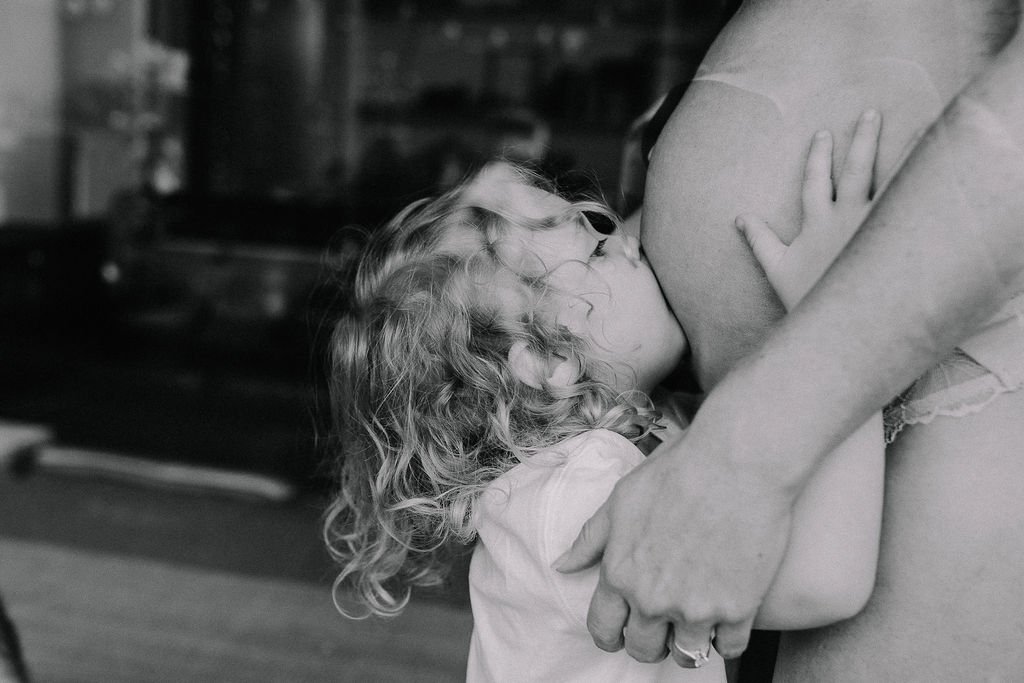
This is an essay on the passage of time in motherhood — on presence, impermanence, and the quiet ache of watching our children grow.
There are moments in motherhood when time feels almost physical — like something you can touch with your hands, taste on your tongue, feel tugging at the edges of your days. It becomes its own presence in the room. A quiet, steady hum. A pulse. A countdown. A longing.
Before children, time was a background rhythm I rarely noticed. Days were elastic. Years blurred. I moved through life with a kind of innocent naivety, assuming time would always feel abundant — a resource I could spend without thinking. I didn’t yet understand the weight of a single season, or how quickly a chapter can close before you even realise you were in the middle of living it.
But motherhood arrives and suddenly time touches you back.
It presses its hand to your chest and whispers, pay attention.
Because now time is measured not in hours, but in the length of a nap, the growth of a child, the way a pair of shoes fits today but won’t fit next winter. It’s in the curl of their handwriting evolving, the softening of baby cheeks, the way they reach for you slightly differently each year — less urgently, more assuredly.
This is the tenderness and the tragedy of parenthood:
you spend every day witnessing the slow goodbye to the version of your child you knew yesterday.
And yet, somehow, you’re supposed to keep up with the world’s pace — the relentless demands, the invisible workload, the cultural expectation that you perform motherhood effortlessly while sprinting across every other domain of life.
No wonder the passage of time feels heavy.
No wonder it feels like it’s slipping through our fingers faster with each passing year.
We’re carrying too much to hold it gently.
Modern motherhood compresses time — not because the days are shorter, but because our bandwidth is thinner. We are stretched between screen and sink, work and worry, schedules and school notes, emotional labour and the fierce longing to simply be with the people we love.
And in that stretching, the years seem to accelerate.
Life becomes a blur of logistics punctuated by fleeting moments of presence — those rare pauses where you catch your breath and realise how much has changed without your permission.
Sometimes this realisation is comforting:
nothing lasts forever means the hard parts will soften, the weary seasons will lift, the storm will pass.
Other times, it breaks your heart wide open:
nothing lasts forever also means the sweetness is slipping away as quickly as it arrives.
This is the paradox we learn to hold — the ache and the awe.
The grief and the gratitude.
The letting go and the leaning in.
But maybe this is the quiet invitation of time:
not to grip harder, rush faster, or preserve every moment perfectly…
but to return, again and again, to presence.
To the warm weight of a child leaning into you.
To the way their laughter fills the walls.
To the soft ordinariness of today — the kind you will ache for one day without realising it was the holy part.
Every ending is the beginning of something new.
Every season contains a seed of the next.
Every moment asks: will you be here for this?
And perhaps that’s what time ultimately is —
not a measurement, but a mirror.
A reminder of how deeply we are capable of loving.
A gentle truth:
that motherhood is a story of continual becoming,
and that nothing — not the beauty, not the exhaustion, not the wonder, not the ache —
remains the same for long.
Which is devastating.
And also, in its own way, the saving grace of it all.